Book Appointment Now
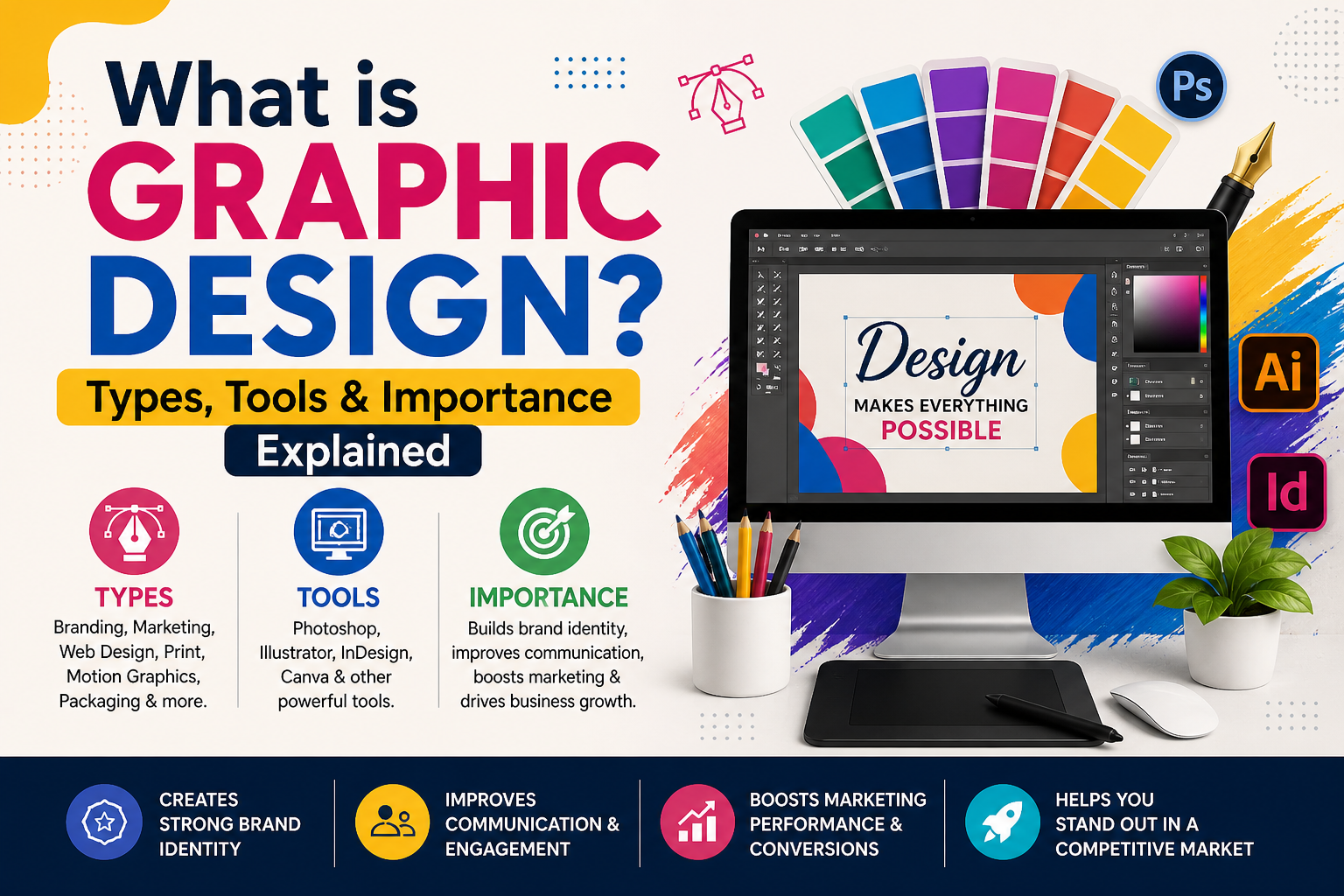
What is Graphic Design? Types, Tools & Importance Explained
Introduction: What is Graphic Design
Graphic design is everywhere from the logo on your phone to the ads you see on social media. It plays a major role in how businesses communicate and how people understand information.
In this blog, you’ll learn what graphic design is, its main types, the tools designers use, and why it is important for business and marketing.
What is Graphic Design?
Graphic design is the process of creating visual content to communicate a message.
It uses elements like colors, fonts, images, and layouts to present information in a clear and engaging way. The goal is to make content easy to understand and visually appealing.
Graphic design is used in branding, advertising, websites, social media, and many other areas. It helps businesses connect with their audience and build a strong identity.
Key Elements of Graphic Design
Graphic design is built on a few important elements that work together to create effective visuals.
Color is one of the most important elements. It affects emotions and helps create brand identity. Different colors can convey different messages.
Typography refers to the style and arrangement of text. Good typography improves readability and makes your content look professional.
Images and illustrations help support your message and make your design more engaging.
Layout and composition decide how all elements are arranged. A well-structured layout makes the design easy to understand.
Visual hierarchy guides the viewer’s attention. It highlights the most important information first.
Types of Graphic Design
It includes different types based on purpose and usage.
Logo and Brand Identity Design
This type focuses on creating a brand’s visual identity.
It includes logo design, color palettes, typography, and brand guidelines. A strong brand identity helps businesses become recognizable and trustworthy.
Marketing and Advertising Design
This includes designs used for promotion.
Social media posts, banners, ads, brochures, and posters fall under this category. These designs aim to attract attention and drive engagement.
Web and UI Design
This type focuses on designing websites and digital interfaces.
It includes layout design, user interface (UI), and user experience (UX). The goal is to make websites easy to use and visually appealing.
Print Design
Print design includes materials that are physically printed.
Examples include business cards, flyers, brochures, and packaging. Even in the digital age, print design is still important for branding.
Motion Graphics and Animation
This involves animated visuals.
Motion graphics are used in videos, advertisements, and social media content. They help tell stories and capture attention quickly.
Packaging Design
Packaging design focuses on how products are presented.
Good packaging design attracts customers and influences buying decisions. It also reflects the brand identity.
Tools Used in Graphic Design
Graphic designers use various tools to create high-quality designs.
Design Software
Popular tools include Adobe Photoshop for image editing, Adobe Illustrator for vector graphics, and Adobe InDesign for layout design.
Online tools like Canva are also widely used, especially by beginners and small businesses.
Supporting Tools
Designers also use stock image websites for visuals, font libraries for typography, and color palette tools to choose the right colors.
These tools help improve efficiency and creativity.
Importance of Graphic Design
Graphic design is important for both businesses and individuals.
Builds Strong Brand Identity
Consistent design helps create a recognizable brand.
It builds trust and makes your business look professional.
Improves Communication
Visuals make information easier to understand.
It helps simplify complex ideas and present them clearly.
Boosts Marketing Performance
Attractive designs increase engagement.
They make ads and social media posts more effective.
Increases Sales and Conversions
Good design influences customer decisions.
Clear and appealing visuals encourage users to take action.
Helps You Stand Out
Unique design makes your business different from competitors.
It helps you attract attention and create a strong impression.
Benefits of Professional Graphic Design
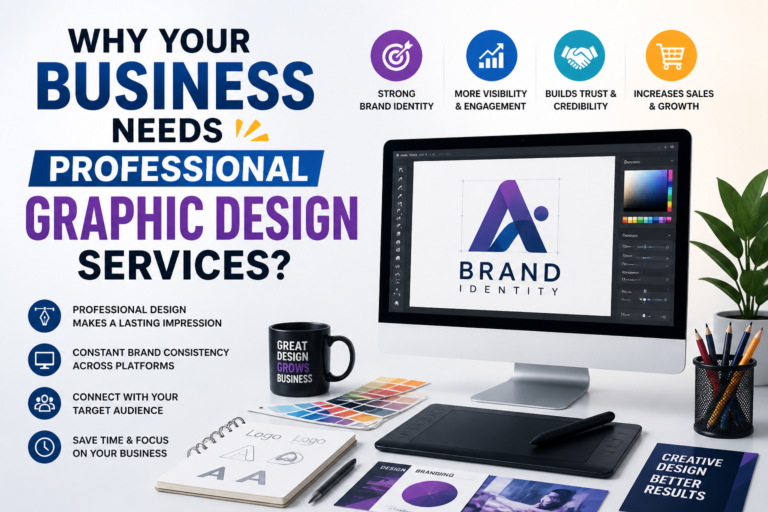
Hiring a professional graphic designer offers many advantages.
You get high-quality and strategic designs that match your business goals. It saves time and ensures consistency across all platforms.
Professional design also delivers better results compared to DIY designs.
Common Graphic Design Mistakes to Avoid
Some common mistakes can reduce the effectiveness of your design.
Inconsistent branding confuses customers. Using too many colors and fonts makes design messy. Poor layout and spacing affect readability.
Low-quality images can damage your brand image. Avoiding these mistakes helps improve your design quality.
How to Get Started with Graphic Design
If you are new to graphic design, start by learning the basic principles.
Use beginner-friendly tools like Canva. Practice regularly and try different design styles.
Building a portfolio can help you improve your skills. If needed, you can also work with professional designers.
Future of Graphic Design
Graphic design is constantly evolving.
AI tools are making design faster and more efficient. Motion graphics and video content are becoming more popular.
Personalized and interactive designs are also growing. The future of design will focus more on user experience and technology.
Conclusion
It is an essential part of modern communication.
It helps businesses build strong brands, improve marketing, and connect with their audience.
Understanding the types, tools, and importance of graphic design can help you use it more effectively.
Whether you are a business owner or a beginner, investing in good design can make a big difference.